


Thick, shapely eyebrows can transform your whole face, as they perfectly frame the eyes, provide a balance to your features and can even add structure to the face. As a result, home remedies to make eyebrows thicker naturally is also being searched for. Coconut oil, a cheap, common household item that most people would have it, can make my eyebrows grow?
The reality is, coconut oil can make the brows grow healthier, it cannot help with growth like a magic serum. Coconut oil cannot grow hair follicles, however it could reduce hair breakages, moisturize the skin under your eyebrows, thereby making for a more conducive environment for hair to anchor to and look fuller.
Table of Contents
What Is Coconut Oil for Eyebrows?

Coconut oil is a natural plant based oil that can be obtained by pressing the flesh of a coconut. It has plenty of fatty acids, in particular lauric acid, which gives it the moisturising and protective benefits. People typically use virgin coconut oil or cold pressed coconut oil for their eyebrows.
When applied to the brows, coconut oil may help:
- soften coarse eyebrow hairs
- reduce dryness and brittleness
- condition the skin beneath the eyebrows
- protect hairs from breakage
- make brows look shinier and healthier
Definition: What “eyebrow growth” really means
When people say they want their eyebrows to “grow,” they usually mean one of three things:
| Goal | What it means |
| Faster growth | Hair seems to appear more or faster |
| Less shedding | Less hair loss or breakage of brow hair |
| Looks nicer | Eyebrows are thicker, darker, and healthier-looking. |
Coconut oil may help more with conditioning and protection than with true new growth.
Will Coconut Oil help eyebrow hair grow?
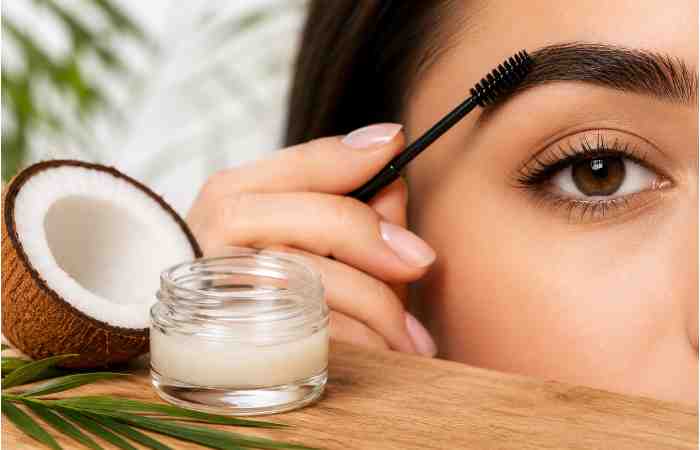
We are not suggesting coconut oil will help grow eyebrows like therapy or a drug, but may help anyway:
Here is the simple truth:
- It cannot create new follicles
- It cannot reverse genetic eyebrow thinning
- It may help protect existing brow hairs
- Might dry and break brows
- May enhance the appearance of brows with consistent use
So in conclusion if your brows are thinning due to dryness, over-plucking, or are breaking off or being rubbed away then coconut oil could work. If thinning eyebrows are to do with hormonal changes, stress, or other conditions of the skin or a nutritional deficiency, then it will not.
Why Coconut Oil May Help Brows Look Fuller
Coconut oil works mainly by supporting the hair you already have.
-
It moisturizes the hair
The more dry your brow hair, the easier it will be to break the hair and cause them to be brittle. Coconut oil adds a coating to your brow hair and locks moisture into the hair.
-
It may reduce protein loss
A lot of our hair consists of protein. It is believed that coconut oil can actually aid in preventing protein loss from hair strands and, as such, makes each hair shaft feel firmer.
-
It protects the skin
Healthy skin under the brow is essential. If the skin around is dry or inflamed, the hair will appear sparse and irregular.
-
It may reduce breakage from rubbing or makeup removal
The skin under the eyebrow must be in good health. It will appear thin and “hairy” if skin around it is dry or red.
What the Evidence Says
There is more research for the use of coconut oil on scalp hair rather than on eyebrows specifically. For the scalp and hair, there are several studies that show how coconut oil might be beneficial in limiting protein loss from damaged hair and increase its suppleness and strength. This does not mean eyebrows will grow faster but indicates it can be beneficial in the condition of hair.
For eyebrows, the evidence is mostly indirect:
- Healthier hair can break less
- Less breakage can make brows appear fuller
The truth is, more water is absolutely not a bad thing, in fact, they will look all the better for it.
So to summarize coconut oil correctly it can indeed probably benefit the health and look of your eyebrows but it is certainly not an accepted Eyebrow Growth treatment.
Timeline: When Might You See Results?
Coconut oil is not a fast solution. If it helps, the changes are usually subtle and gradual.
| Time frame | What you may notice |
| 1–2 weeks | Brows may feel softer and less dry |
| 3–4 weeks | Less breakage, better shine, healthier appearance |
| 6–8 weeks | Brows may look a little fuller if breakage was the main problem |
| 2–3 months | More noticeable improvement in texture and grooming appearance |
Important note
If your eyebrow hair follicles are inactive or damaged, coconut oil will not “wake them up.” That is why results depend on the cause of thinning.
Coconut Oil vs Castor Oil for Eyebrows
The mention of Coconut oil vs. castor oil is made due to both of these being naturally sourced and favored for eyebrow growth. They are however not the same.
| Feature | Coconut Oil | Castor Oil |
| Main role | Moisturizes and protects | Thick, occlusive oil used for conditioning |
| Texture | Light to medium | Very thick and sticky |
| Feel on skin | Easier to spread | Heavier and more noticeable |
| Main benefit | Helps stop dryness and breakage. | Coats hair firmly, might look to be able to grow thicker brows |
| Best for | Sensitive skin, dry brows, usage for everyday | Excessively dry, infrequent use |
| Risk of irritation | Usually low, but possible | Can feel heavy and may irritate some skin types |
| Evidence for growth | Limited | Also limited |
Which is better?
It depends on your skin and brow needs.
- Use coconut oil for a lighter, more wearable, and easily incorporated oil.
- Use castor oil for a heavier oil and the acceptance of a thick feel.
Coconut oil is likely the kinder of the two options for most people.
How to Use Coconut Oil on Eyebrows
It is important to use coconut oil in the correct way. More is not good.
Method step by step
- Wash and remove all traces of makeup.
- Ensure your eyebrows are clean and dry.
- Take a little coconut oil on your clean cotton bud/fingertip.
- Apply to the brow area as a thin layer along natural brow shape.
- Massage in gently for a few seconds.
- Leave on overnight or for 30+ minutes.
- Rinse off the next morning if required.
Best time to apply
Night is usually best because the oil can sit on the brows for a long time without being disturbed.
How often
Once daily is enough for most people. Using too much can clog pores or cause irritation around the brow area.
Tips to Get Better Results
Coconut oil works best when it is part of a healthy brow routine.
| Tip | Why it matters |
| Avoid over-plucking | Repeated tweezing can thin brows over time |
| Use gentle makeup removal | Harsh rubbing can cause hair breakage |
| Eat enough protein | Hair needs nutrients to grow well |
| Stay hydrated | Dry skin can make brows look dull |
| Be patient | Eyebrow hair grows slowly |
| Check for skin irritation | Inflamed skin can affect hair appearance |
| Use a clean applicator | Reduces the risk of irritation and infection |
Do’s and Don’ts
Do
- use a small amount
- patch test first
- apply on clean brows
- be consistent
- choose virgin or cold-pressed coconut oil
Don’t
- expect overnight results
- apply heavy layers
- use if it causes itching or pimples
- rub your brows aggressively
- rely on oil alone if thinning is sudden or severe
Who May Benefit Most from Coconut Oil?
Coconut oil is most useful for people whose brows are:
- dry and brittle
- damaged from makeup removal
- thin because of breakage
- over-groomed but still growing
- dull and rough in texture
It may be less helpful if eyebrow thinning is caused by:
- hormonal changes
- thyroid problems
- nutritional deficiencies
- alopecia
- eczema or dermatitis
- chronic stress
- aging-related follicle loss
Also, rapid brow hair loss and balding areas should be considered medically rather than just using home care.
Potential Side Effects
Coconut oil is generally safe; however, not all are able to use it.
Possible issues include:
- clogged pores
- small bumps around the brow area
- irritation or redness
- allergy in sensitive skin
- greasy residue on skin or makeup
Simple patch test
You want to dab on a very small bit to either behind the ear or inner arm. Wait for 24 hours and if it doesn’t itch or become red it should be more safe to test on the brows.
Best Way to Think About Coconut Oil for Eyebrows
Coconut oil is NOT the magic solution for growing your eyebrows! Actually, it is better to view it as more of a treatment for your brows.
It can help the brows you already have look:
- softer
- smoother
- shinier
- less damaged
- a little fuller if breakage was the issue
So that’s a cheap natural routine for anyone that’s like me, doesn’t have big expectations.
Comparison Summary: Coconut Oil vs Other Brow Solutions
| Option | Main purpose | Best for | Limitations |
| Coconut oil | Moisture and protection | Dry, brittle brows | Not a true growth treatment |
| Castor oil | Heavy conditioning | Very dry brows | Can be greasy and heavy |
| Brow serum | Growth support | People seeking stronger results | More expensive, may contain active ingredients |
| Dermatologist treatment | Treat underlying cause | Medical hair loss or patchy brows | Requires diagnosis and guidance |
Final Verdict
Does coconut oil make eyebrow hair grow?
The results are not confirmed, although it may potentially benefit your eyebrow hair’s health, softness and prevent breakage resulting in longer looking, better kept brows in the long run. Patience and commitment are a must.
Coconut oil could be an alternative solution to consider when the reason for thinning eyebrows is down to them being dry and breaking, plucked too much, etc. Drastic and sudden loss requires investigation.