

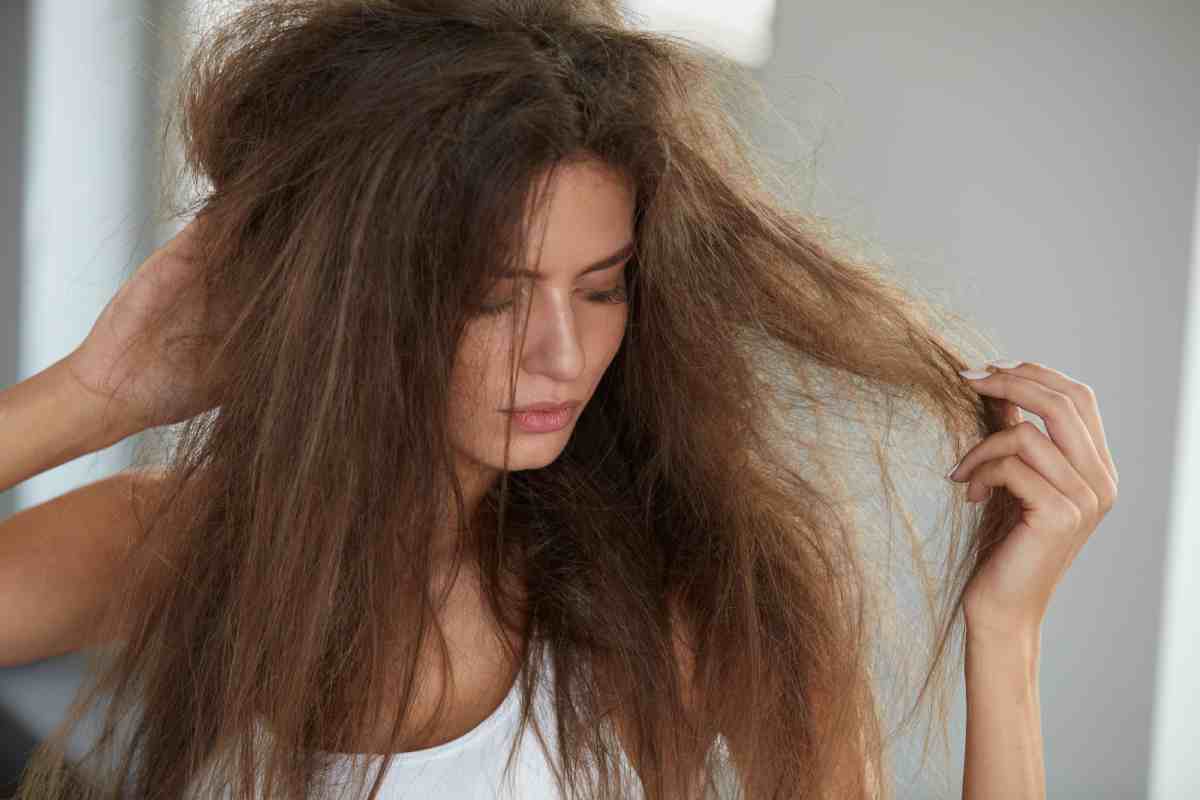
Humidity is the invisible force that can ruin a perfectly good hair day. It does not matter whether your hair is freshly cut or your hair is of an ideal color, when the atmosphere is moist, hair responds. Nevertheless, the outcome is not magic but is chemistry and structure. You get to know what is going on behind every strand and practice several regular routines, you are not chasing the weather anymore, but instead, you are controlling your image.
Table of Contents
How humidity affects hair

Higher relative moisture content is contained in air with high relative humidity. Hair fibers are also hygroscopic i.e., they hold moisture in the surrounding. The strands are layered in three layers with the topmost layer or cuticle being composed of overlapping scales. At the time when cuticle is lying flat the hair is smooth and shiny. When it’s lifted or damaged, cuticles let moisture in unevenly.
The water that enters the cortex causes the hair to swell unevenly where cuticles and internal structure are irregular. This uneven swelling bends and separates strands, producing frizz, loss of definition in curls, and limpness in straight hair. Repeated cycles of swelling and shrinking — especially in improperly cared-for hair — cause hygral fatigue, a form of wear that increases frizz long-term.
How to protect hair from humidity?
- How to protect hair from humidity is a common question, and how humidity affects different hair types by better not younger. so the answer is to provide nourishment and moisturize to your hair well.
- Do you have swelling hair with humidity? Well, know that the humidity’s impact on the hair worsens markedly when the latter is damaged, poorly maintained, and lacks in hydration.
- In fact, as the hair is not resistant, moisture penetrates more easily into the hair fibre, causing it to swell immediately.
- In fact, be sure to maintain a regular care ritual adapted to your hair type. The essential products to have in your bathroom?
- A hydrating shampoo, a softening conditioner, as well as a nourishing and fortifying mask.
- Perfectly shaped, your hair will then be able to shield against humidity.
Dry your hair well after shampooing
- Wet hair absorbs water (and therefore moisture) much more easily!
- So, there is no question of going out in the morning with hair that has just been washed and still damp.
- If you have a little time ahead, it is best to let your lengths air dry at home.
- Another express and an ideal alternative for women in a hurry to avoid having hair that swells when it dries: use a hairdryer.
- In this case, it is important to first apply an anti-heat cream for the hair, such as the thermo-active leave-in spray Expert Protection 230 ° Franck Provost.
- An essential reflex to protect hair against the drying effect of heat!
Styling smart on days of high humidity
- One thing is certain: straightened and loose hair is inevitably more vulnerable to humidity.
- So a little practical advice: just before sleeping or when you wake up, always check the weather forecast to choose the right hairstyle to achieve.
- It helps avoid launching yourself into a smoothing or a brushing which would not hold the day anyway.
- And if the humidity is high, we recommend that you tie your hair back to protect it, prevent the risk of frizz, and keep it from getting out of hand.
- As for the style you choose to adopt, between braids, ponytails, or buns of all kinds, it’s up to you!
Use an anti-humidity lacquer. - For all those who like to achieve pretty hairstyles and this, whatever the climate, there is, fortunately, a pro tip: use anti-humidity hairspray.
- The latter will fix the hair and, as its name suggests, act as a barrier against humidity.
- This is why Franck Provost offers its Ultra anti-humidity hairspray, whose primary mission is to counter all the negative effects.
- It is linked to this phenomenon: hair swollen with humidity, sparkling, frizz, or even curls without spring.
- Resistant up to 80% humidity, it, therefore, allows you to keep a hairstyle on top whatever the conditions.
Quick comparison — which anti-humidity strategy suits you?
| Strategy | How it works | Best for | Pros | Cons |
| Anti-humidity finishing spray | Forms a light, breathable film to block moisture | Most hair types | Fast, portable | Temporary; needs reapplication |
| Silicone serums | Smooth cuticle and repel water | Frizzy, porous hair | Instant sheen and smoothness | Build-up; can weigh fine hair |
| Leave-in + oil seal | Hydrates then seals to slow moisture entry | Curly/medium-thick hair | Nourishing; natural finish | Needs balance; humectants can puff in high humidity |
| Keratin / smoothing treatments | Professionally reduces porosity and smooths | Very frizzy or chemically treated hair | Long-lasting results | Costly; salon visit; some treatments use formaldehyde |
| Protective styles (braids/buns) | Keeps hair compact and reduces exposure | Any hair type | Product-free; reliable | Limits style variety |
| Deep conditioning + protein balance | Repairs cuticle and strengthens strand | Damaged or high-porosity hair | Improves long-term resilience | Overuse of protein can stiffen hair |
Know your hair type – pick the right humidity strategy
| Hair Type | Typical issues in humidity | Best tactics |
| Fine, straight | Falls flat quickly; frizz at roots or flyaways | Lightweight silicones, volumizing anti-frizz sprays, dry shampoo at roots |
| Wavy / loose curls | Loss of definition; frizz between waves | Hydrating leave-ins, cream stylers + oil seal, plopping for definition |
| Curly / coily | Extreme frizz, uneven shrinkage | Heavy creams, butters, gel + oil seal, protective styles |
| Chemically treated / bleached | Cuticle damage → high porosity → frizz | Protein treatments, deep conditioning, keratin smoothing if suitable |
| Thick, coarse | Puffs out, hard to control | Dense oils, heavy serums, regular trims to remove split ends |
A practical, realistic routine — daily and weekly
Daily morning routine (15–20 minutes)
- Shower smart. Use lukewarm water. Hot water opens cuticles; finish with a cool rinse to help them lie flat.
- Choose the right cleanser. Use a smoothing, sulfate-free shampoo if your hair is colour-treated or dry; choose a clarifying shampoo occasionally if you use many silicones.
- Condition deliberately. Focus on mid-lengths and ends. Look for conditioners with emollients and light silicones or oils.
- Microfiber towel or cotton T-shirt dry. Pat and squeeze — avoid rough rubbing.
- Leave-in treatment. Use a lightweight leave-in; steer clear of glycerin-heavy products on very humid days.
- A pea-sized amount of silicone serum or light oil on damp lengths and ends creates a moisture barrier.
- Style smart. For heat styling, use a heat protectant containing film-formers; finish with an anti-humidity spray.
Evening and weekly care
- Weekly deep treatment. Use a hydrating mask once a week. If hair is high-porosity, alternate with a protein-containing mask every 3–6 weeks.
- Night protection. Sleep on satin or silk; tie hair in a loose, low bun or use a silk bonnet.
- Monthly clarify. Use a clarifying shampoo monthly to remove silicone build-up and keep products effective.
DIY anti-humidity treatments
-
Quick anti-frizz serum (no fuss)
- 1 tsp argan oil
- 1 tsp lightweight silicone serum (optional — use if you like the silky finish)
Warm together, apply a tiny amount to damp ends. Works as a sealant.
-
Moisture-seal spray (DIY leave-in)
- 1 cup distilled water
- 1 tsp glycerin (a humectant — use less on very humid days)
- 1 tsp aloe vera gel
- 5 drops lavender essential oil (optional)
Shake and spritz on damp hair, then seal with a small amount of oil.
-
Deep conditioning wrap
- 2 tbsp coconut oil + 1 tbsp honey + a few drops of lemon (optional)
Warm, apply to mid-lengths and ends, cover with a warm towel for 20–30 minutes, then shampoo and condition. (If your hair is protein sensitive, avoid honey frequently.)
Note: Humectants like glycerin and honey pull moisture from the air — in very humid weather they can cause puffiness. If humidity is extreme, skip humectant-heavy DIYs and focus on sealants.
Styling tips that actually work
- Blow-dry Tension: Round brush: With the round brush, pull the air through control the hair: Taut, then with a cool blast to hold cuticles.
- Flat-iron sealing: Once the product is dry, very lightly blow-dry hair with a flat iron to seal the product and cuticle only if your hair can manage heat. Always use a heat protectant.
- Braids and buns: When it might be humid, braids and other forms of buns should be styled into updos that do not display much on the surface.
- Piling of products: Yea, light…. heavier. Leave-in mist/styling cream/ oils/ serum / finishing spray. Layering makes it greaseless and prevents barrier discontinuity.
- Do not brush too hard: When hair is dry, brushing will raise cuticles, and when wet, definition is lost, and hair should be finger-detangled or wide-tooth-combed.
Haircut & long-term choices that reduce daily work
- Choose smart layering: Long layers can remove bulk and help hair settle; blunt ends for fine hair give sleekness. Speak with a stylist about your daily routine and local climate.
- Consider professional smoothing (if appropriate): Keratin or smoothing treatments reduce porosity and dramatically cut daily styling time. Evaluate cost, maintenance, and any chemical exposure.
- Prioritize health: Lower heat usage, regular trims, and balanced nutrition reduce hygral fatigue over time.
Common mistakes and how to fix them
- Heavy leave-ins on fine hair. Remedy: lightweight sprays or emulsions are to be used and oils applied to length only.
- Applications of humectants on days that are too humid : Fix: in case of sealant first affecting, change to sealant first product; apply glycerin-free type.
- Skipping cold rinse. Fix: use cooler water to take a shower in order to stimulate flatteners of cuticles.
- Applying oil to the scalp. Remedy: apply the mid-lengths and ends only, the oils of the scalp will be oily roots.
- Ignoring damage. Fix: honest repair protocol(deep conditioning/controlled protein) is the initial step prior to searching for anti-humidity fast fixes.
Final words
Humidity does not imply that one has to lose style on a daily basis. The trick is to know the porosity and the requirements of your hair and apply a sealing step after applying the moisturiser and good smart styles when you feel bad because of the weather. Spend a bit of money on some basics (an excellent sealant serum, a de-humidifier spray, a hydrating weekly mask) and instead of having to struggle against the climate, you will have more time of feeling good.
